Bach B minor Mass
Monumental
There’s no avoiding the fact that Bach’s B-minor Mass is a beast of a work. About two hours of
choral singing, arias, duets and orchestral wonders. It makes for a monumental edifice that isn’t
for the faint-hearted. Last Saturday evening at Kings School (2nd December) the ever-resourceful
Amici Choir, supported by The Bristol Ensemble and vocal soloists, conducted by Gareth Dayus-
Jones, demonstrated their ambition, musicality, vocal dexterity and endurance. It was an
impressive performance but also exhausting. These days professional choirs tend to opt for a
lightweight approach, smaller forces, agile without too much heft. Dayus-Jones, however, chose
the more traditional approach favoured by the big choirs of old with slower tempi and a grandeur
of vision. The risk is for the work to drag and for a performance to feel interminable. Bach never
heard the work performed and one wonders whether he might have edited much had he done so.
So did it drag and linger? The answer is yes, in places.
Amici is without doubt one of the best choirs in the south-west and they were on good form
throughout the performance to the extent that they had plenty of voice left for the final Dona
nobis pace chorus which was simply wonderful. Throughout there was some exceptionally good
singing from all sections of the choir with great articulation in the more florid passages yet plenty
of heft and power when called upon. The basses’ performance in the Et iterum venturus was a
revelation. They had terrific focus and presence and clearly enjoyed their moment.
Elsewhere, some of the speeds tended to be on the slow side which risked things becoming a bit
wooly but generally this was avoided. There are dangers too when a large choir moves at speed.
The Confiteor chorus is complex and a dangerous moment both rhythmically and pitch-wise in
ways that momentarily seem to look ahead to Beethoven, but thankfully on this occasion,
everyone and the music emerged unscathed. Within the mix of vast choruses there were
luminous contributions from five soloists. Soprano Philippa Hyde was elegant in her Laudamus
aria and she was joined by Amici alto Clara Wood who sang beautifully in their opening duet.
Counter-tenor William Purefoy gave us two arias with excellent diction although with the addition
of some wayward top-notes. Tenor Nicholas Madden sang with grace and clarity whilst baritone
Andrew Rupp was on first-class form. He has an even tone throughout his register and both of his
arias were highlights.
Alongside the vocal forces was the excellent Bristol Ensemble. The orchestra acts as both a
support and a musical counterbalance to things going on in the choir. Alas, the chapel acoustics
are notoriously tricky and favour lower sounding instruments leaving the violins and violas fighting
for audibility. The bright Baroque trumpets (three of them) were at times a little too bright and
dominating…but it was an exciting and celebratory sound. Although achieving a good balance is
important in any context, with little rehearsal time available, it is perhaps inevitable that such
issues would present during the performance. These gripes aside, the orchestra played with verve
and panache, they were technically assured and confident throughout. The continuo ensemble
were excellent and the principal flute playing of Roger Armstrong was outstanding, especially in
the Domine Deus duet with tenor and soprano.
As I alluded to at the beginning, tackling the B-minor Mass is a serious undertaking for any choir.
The scale is massive, the vocal stamina required is colossal and the challenges for the conductor in
shaping the work are immense. In this respect Amici are utterly fearless and capable of anything.
Unlike Handel’s Messiah which was famously composed in three weeks, Bach spent 17 years
assembling the work from earlier pieces as well as adding new music. It perhaps lacks a coherence
recognisable in other large scale works but its grandeur is undeniable.
The big chapel at Kings College, despite it acoustic flaws, felt right for a work on this scale. The
enormous illuminated trees behind the choir certainly added a festive feel to the evening.
At the beginning, the near-capacity audience was welcomed by Amici chairman and chorister,
David Valentine, who also thanked the Mayor, the High Sheriff of Somerset and the Deputy Leader
of Somerset Council for their attendance. Bravo them for supporting this excellent event which
was a remarkable achievement for all concerned.
Wayne Bennett
Rejoice!
King’s College Chapel, Saturday 9th April 2022
Independent Concert Review by Wayne Bennett
Musical Energy Let Loose
On reflection, it was strange to spend over two hours last Saturday evening listening to a programme of celebratory classical music entitled Rejoice! At a time when the news is dominated by so many crises, it was, for a moment, like being in a parallel universe. Maybe we’re not used to hearing live music on this scale. The Amici choir had marshalled an outstanding line-up of soloists and orchestral musicians. Their number was led by the internationally renowned soprano, Elizabeth Watts, who also happens to be the choir’s Patron. Joining her were alto Charlotte Badham, tenor Eamonn Mulhall and bass John Broad. Conducting honours were cleverly shared by the choir’s two music directors, Andrew Trewhella and Gareth Dayus-Jones.
The moment the orchestra struck up the start of Henry Purcell’s Te Deum in D we knew this was going to be an exceptional concert. The brilliant sound of trumpets and timpani heralded in the choir. It was a thrilling sound. Several members of the choir made individual contributions that were both idiomatic and beautifully contrasting against the larger forces from which they were drawn. Indeed, the contrasting voices achieved much emotional colour which was musically very affecting.
Elizabeth Watts took to the platform for a memorable performance of Mozart’s Exsultate Jubilate. Her experience on the operatic stage was much in evidence, not just in the vocal fireworks the piece demands, but also in the interpretative possibilities that the text provides. Watts is one of the world’s finest Mozartian sopranos (who happens to have her home in Taunton). Her coloratura is impeccable and the control and purity of line is simply extraordinary. Her voice has matured in recent years providing greater weight to the middle and lower register whilst in no way taking away anything from the silver-like sheen at the top of her range.
A break in texture was provided by an orchestral interlude in which we heard Mozart’s Serenade K525 ‘Eine Kleine Nachtmusik’. It was performed without a conductor with great panache and accuracy.
Elizabeth Watts returned and joined the choir for Mozart’s Laudate Dominum from his Vespers K339. After the busyness of the Serenade it was a moment when the pulse was slowed, the soprano line held in fragile suspension over the blended voices of the choir and orchestra.
In contrast the second part of the concert was dramatic, mostly loud, and even a little bombastic. Four soloists joined the choir and orchestra for Haydn’s Nelson Mass. It is a big sing for everyone – celebratory of Nelson’s victory over Napoleon, of course. A highlight was the Qui Tollis with Elizabeth Watts, John Broad and choir. Broad’s singing was lyrical and utterly beautiful, well-matched to Watts who reined in her voice to create a wonderful balance. Gareth Dayus-Jones conducted with great precision that elicited plenty of momentum and thrilling climaxes. He moved the work apace towards its resolution on the words Donna nobis pacem – Lord grant us peace. Exhausted by the impact the audience agreed with an enthusiastic and sustained response.
Once again, Amici confirmed its status as one of the region’s finest choirs. Their collective ability to organise concerts of this calibre is nothing short of exemplary. If I have a gripe, then it was with the presentation. The chapel at King’s College is arguably the best venue for large-scale classical music in Taunton; certainly in terms of acoustics. This being the case, it’s a pity that the lighting is so dire. We in the audience could hardly see the soloists and I noticed that some singers had invested in micro-lights attached to their scores. If these events are to be valued for what they are, then surely a small investment in some appropriate lighting needs to be made by the school.
Wayne Bennett
In Terra Pax
King’s College Chapel – Saturday 4th December 2021
The joy of being part of the audience at Amici’s first live concert for almost two years was matched only by the joy of the musicians and singers, performing – at last – for a real audience!
“Et in Terra Pax” (And on Earth, Peace) was the winter offering by Musical Directors Andrew Trewhella and Gareth Dayus-Jones at King’s College Taunton on 4th December, performed to a capacity audience – insofar as social distancing allowed. The atmospheric King’s College Chapel, simply lit and seasonally decorated, offered the perfect location for a concert which offered space for hope and contemplation.
Faure’s music opened the concert, beginning with one of his early works, the lovely “Cantique de Jean Racine” followed by his “Messe de Requiem”, so well known and loved. Faure wanted to write about rest, the pure meaning of requiem; he wanted to present a serene and comforting composition which would calm, not worry, the listener. Amici did this with huge style and tenderness, accompanied by superb players from the Bristol Ensemble, John Young on the organ and Sioned Williams on harp.
“A Ceremony of Carols” by Benjamin Britten is a hugely popular seasonal piece and one which clearly delighted the audience. Well known, the “Carols” are largely the product of 15th and 16th century writers, telling the story, in old English, of the birth of the Christ Child. The women of the Amici choir, accompanied by Sioned’s remarkably poignant harp, thrilled all in the Chapel, for the purity and simplicity of their voices and Sioned’s unique flair and individuality, honed in a lifetime of distinguished music making across the world.
The concert’s title, “In Terra Pax”, now gave us Gerald Finzi’s account of the angels’ appearance to the shepherds. He described the piece as “being seen by a wanderer on a dark and frosty Christmas Eve in our own familiar landscape”. This setting was indeed calm and contemplative, just the perfect theme for the evening.
“What Sweeter Music” by John Rutter ended Amici’s concert in a warm and well known way, leaving us in no doubt that music can lift our souls and hearts – even in these strange times. It is a credit to Amici and all the musicians connected with tonight’s concert that we certainly went out into the chilly, dark December night feeling uplifted and sustained. Thank you Amici!
Pauline Homeshaw
Terrific Vocal Power!
The roof was almost blown off St. John’s Church, Park Street, on Saturday evening thanks to the vocal efforts of Taunton’s Amici Choir aided and abetted by a phalanx of brass players, the magnificent organ and some thrilling percussion. That was all for John Rutter’s ‘Gloria’ which concluded a programme of British and American music.
As we now come to expect from Amici, the choice of works was ambitious and thoughtfully planned; although it did make for a long evening on hard pews. Consisting of twentieth century works plus some more recent compositions, the evening went by the title of ‘One Equal Music’ – a quote from the seventeenth century metaphysical poet, John Donne. After an auspicious rendition of Rutter’s Cantus – mysterious and celebratory with vocal and brass calls and returns – the first half consisted of major works by Aaron Copland, the young British composer, Richard Allain, and American contemporary composers, Morten Lauridsen and Eric Whitacre. Sounding like a young Jessie Norman, vocal honours must go to guest artist, mezzo-soprano Beth Mackay in the Copland. His ‘In The Beginning’ is a big and difficult sing – harmonically and rhythmically – but both soloist and choir were more than capable of the challenge. Mackay’s diction and her sensitivity to the dramatic qualities of the work was exemplary – something also evident in the choice of four art songs she performed in the second half.
After the interval we were treated to an early lyrical work by Benjamin Britten, ‘Rejoice in the Lamb’. It is a sign of their vocal accomplishment that the choir could supply four very fine soloists for this piece and in other works too. Charlie Pemberton sang beautifully with a clear treble quality to her voice, tenor Mathew Dietz was truly affecting and it was good to hear Clara Wood’s proper contralto contribution. Bass Julian Sutton sang with poise, clarity and great control. Three spirituals followed from Michael Tippett’s ‘A Child of Our Time’ – simple and well-done especially after the complexity of the Britten. Will Todd, another young British composer, followed Beth Mackay’s solo songs. His ‘The Call of Wisdom’ was Neo-Romantic is essence whilst ‘Bring Us, O Lord God, at Our Last Awakening’ had a jazz-swing character. Both works showcased the choir’s versatility to good effect. The evening concluded with the roof-raising ‘Gloria’ by Rutter.
As on previous occasions, the task of conducting was shared between the choir’s Music Director, Andrew Trewella and Assistant Director, Peter Adcock. Both inspired confidence and subtlety from the choir. The also shared piano and organ duties in the various pieces. This flexibility makes for a real sense of everything being collective enterprise. Choral bass, Harold Mead, also provided excellent programme notes and we can be sure that others are deeply involved behind the scenes. Hard pews aside, St. John’s Church, is a very good choice of venue offering good sight-lines, a visually magnificent rood screen and excellent acoustics. The concert was well-attended by an appreciative audience. Amici’s next concert is in Wellington – opera arias and choruses – check out their website for details.
Wayne Bennett
Triumphant Purcell, Handel & Mozart
On Saturday 28 March a large audience at St. James’s church, Taunton, were treated to a feast of choral music by Purcell, Handel and Mozart, performed by the Amici choir under Andrew Trewhella and his assistant conductor, Peter Adcock. Special guests included the world famous exponent of the Baroque trumpet, Crispian Steele-Perkins, and leading soprano soloist Charlotte Ellett. Orchestral support was provided by The Divertimento Ensemble, on modern instruments, led by Mary Eade.
This was an evening of triumphant and energetic performances from start to finish, with the main theme being coronation music. The opening anthem I Was Glad, by Henry Purcell, directed by Peter Adcock, was performed with great flare and energy, and at a lively, attractive tempo. It was followed by Handel’s Let Thy Right Hand be Strengthened, conducted with great strength and clarity by Andrew, under whom Amici delivered solid, crisp and well-prepared choral entries with the text always clearly enunciated. I was particularly moved by the grandeur of the second movement, Let justice and judgement, where the soprano tone in particular (aided by several young voices) was bright, clear and resonant.
Purcell’s evocative Latin motet Jehova, quam multi sunt hostes, replete with Italianate vocal writing and unlike any of his English anthems, was probably originally performed with not many more than one voice to each part. Nevertheless, Amici gave a convincing and colourful choral rendition of this intense work, the drama of ‘Ego cubui et dormivi’ (‘I laid down and slept’) being particularly well conveyed. Apart from an ensemble mishap in the final cadence of the bass solo, the overall effect worked well.
With Crispian Steele-Perkins joining the orchestra on first trumpet for Handel’s anthem The King Shall Rejoice, everyone present knew this would be a dynamic tour-de-force, and indeed it was. Under Andrew, Amici and the orchestra gave a superb performance with all the necessary power and majesty, striking right into the hearts and minds of the audience. The cataclysmic interjections of the trumpet section in the fourth movement, Thou hast prevented him, reminded me of how much King George II, himself a soldier, loved the martial trumpets-and-timpani sounds of the battlefield. Thankfully, in the vast space of Westminster Abbey (and indeed at St. James’s, Taunton) the martial element did not almost deafen the congregation, as was reportedly the case when Handel’s orchestral anthems were performed in the tiny Anglican Chapel Royal at St James’s Palace!
After the interval Crispian and Charlotte performed, from memory, Handel’s Let the Bright Seraphim, in what was one of the highlights of the night. The combination of Steele-Perkins’s flawless, articulate trumpet virtuosity with Elllett’s rich and superbly controlled vocal agility had the listeners spellbound. Ellett gave one of the best performances of Mozart’s Exsultate, Jubilate (a work requiring consummate control over rapid semiquaver coloratura), that I have heard for some time. The Andante was taken more slowly than I would personally have preferred, but this in no way affected the performance, and Ellett’s final vocal cadenza was stunning.
Mozart’s ‘Coronation’ Mass is a stalwart of choral repertoire, and must surely be one of the composer’s most popular Salzburg masses. For this reason I tend to approach performances of it with some trepidation, fearing slow tempi and a lack of musical punch. However, with Amici and Peter Adcock at the helm I was not to be disappointed. His tempi were appropriately lively, especially the Credo, with the choir responding confidently. The soloist quartet (three from the choir) blended together beautifully. I was impressed by Clara Wood’s rich and mellow alto tones and Gareth Deyus-Jones’s crystal clear bass voice.
I last heard Amici in November 2012. Since then, Andrew has evidently moulded his choir into an even more finely-tuned ensemble, capable of taking on a wide variety of choral works, delivering them with great panache and keen stylistic awareness. I look forward to hearing more from them in the future.
PETER LEECH
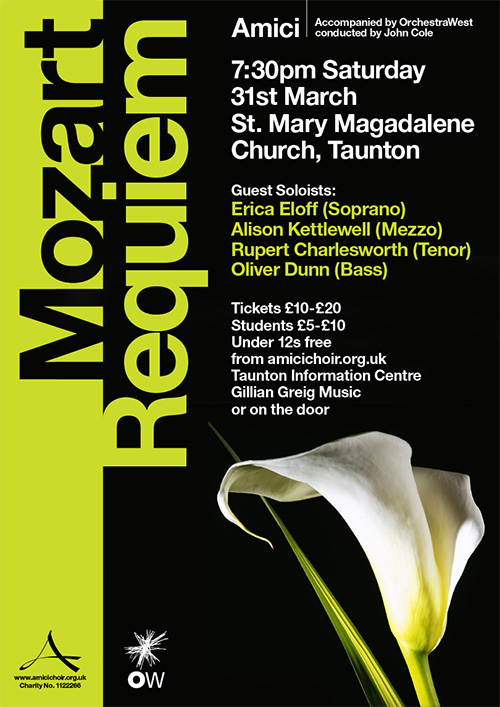
Mozart in Taunton
March 2012, St. Mary Magdalene, Taunton
Soloists: Erica Eloff, Alison Kettlewell, Oliver Dunn, Rupert Charlesworth

As a prelude to Easter, the Amici choir and OrchestraWest performed an all Mozart programme at St. Mary Magdalene’s, Taunton, last Saturday evening. It was a large audience and the main attraction was undoubtedly the Requiem which occupied the second half. Unfinished at the time of the composer’s death, the work was completed by others and some have argued that this accounts for its varied character. None of this detracts from the enduring quality of the work and under John Cole’s expert conducting the work held together as one big musical idea. Cole had a real understanding as to how the different movements segued into each other and how they melded into a coherent whole.
The choir gave a confident performance throughout and it was excellent to see and hear some new young talent among the ranks. Their Dies Irae packed a punch and the quieter singing of the Confutatis linked beautifully to a marvellously baleful Lacrimosa. A fine quartet of soloists added an extra element of class to the performance. Soprano Erica Eloff was wonderfully poised and graceful, her voice was quite ravishing and under superb control. Alison Kettlewell’s beautiful mezzo voice contrasted nicely but blended with Eloff where it mattered. Rupert Charlesworth’s elegant tenor was bright and his phrasing was impeccable. Bass Oliver Dunn plumbed the depths but seemed more comfortable in the higher reaches of his part. The orchestra, led by Barry Haskey, gave full support to proceedings with the clarinet contributions especially beautiful.
The concert opened the Divertimento in D-major, K136, written when Mozart was a teenager. This is a lively and entertaining work requiring some virtuosic playing. Much to the amusement of the audience, John Cole started the orchestra and then promptly sat down to let them get on with it. There were no disasters although the speed created one or two intonation issues and the two ‘cellos and a single double-bass where somewhat overwhelmed by the violins and violas. The more substantial Solemn Vespers of 1780 concluded the first half. At first the choral singing seemed a little uninspired although the singing of the Laudate Pueri was first rate as was the choir’s accompaniment to the Laudate Dominum. Here Erica Eloff gave a radiantly aristocratic performance to which she was self-evidently born to give.
Once again, Amici, OrchestraWest and John Cole gave of their best to a fine evening of music-making. Mozart would have been pleased as indeed the people of Taunton were.
Wayne Bennett
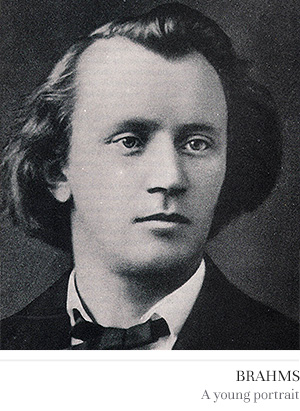
The Passing of the Baton
November 2012, King’s College Chapel, Taunton
Soloists: E Watts, Gary Griffiths
The annual Remembrance Sunday concert held at the voluminous space of King’s College Chapel was a deeply poignant evening on several counts. The Amici Choir and OrchestraWest have now made this event part of the civic calendar and it was good to see it well supported, sold out in fact. The concert was dedicated to the memory of Jennifer McQueen of Lydeard St. Lawrence who participated and supported music in the Taunton area. A bequest from her enabled the evening’s ambitious programme to be undertaken. But perhaps the real poignancy lay in the handing over of the conductor’s baton from John Cole to Andrew Trewhella. It is now well-known that John Cole, who founded both choir and orchestra, has been stricken down by serious illness and it was a sorry sight to see John so dreadfully incapacitated by his condition on Sunday. He was scheduled to have conducted the concert but that was self-evidently not possible.
The concert began with Parry’s Magnificat. A work not frequently performed today and certainly a first for Taunton. It isn’t a work of the highest rank and there were moments of banality which couldn’t be disguised by first-rate singing or orchestral playing. Composed in a time when the Victorians had ‘rediscovered’ Bach there was considerable opportunity for the choir to show off their command of the contrapuntal challenges. Soprano, Naomi Harvey, was authoritative in the bombastic opening movement and sang very beautifully in the quieter passages elsewhere. From one world-class soprano to the second. Elizabeth Watts gave a stunning performance of the Four Last Songs by Richard Strauss. Watts’ singing was effortless, intelligent and utterly artful. Barry Haskin gave a glorious account of the famous violin passage in ‘Beim Schlafengehen‘ – ‘Going to Sleep‘ and a special mention must be reserved for horn player, Tessa White, whose dangerously exposed line was performed with great subtly and exquisite beauty.
After the interval we heard the Brahms Ein Deutsches Requiem – sung in German – and Elizabeth Watts returned to the platform with baritone, Gary Griffiths. After the Parry the choir were certainly warmed up and gave their all. The part singing was wonderfully blended. It is a big sing but these well-trained forces knew when to reign things in and the singing in the final movement was delicate and gentle, just as it should be. Elizabeth Watts delivered her aria with poise and lovingly relished her soaring line. Gary Griffiths displayed a bright clean tone as well as exemplary diction. Conductor, Andrew Trewhella kept the Requiem moving with pace and at no point did it lapse into sentimentality – which it can sometimes do. The orchestra throughout the evening displayed their usual high standards and this was matched by the singing. Musical performances of this standard are an extraordinary achievement. Long may they continue even without Dr. Cole at the helm.
The evening started with a tribute to John Cole from Amici chairman, Linda Nash, and this resulted in a prolonged standing ovation. A typically humble response from John was read out by OrchestraWest chairman, Chris Davies CBE, acknowledging the contribution of so many friends and colleagues. Without prompt, the evening ended with another standing ovation as John left the chapel. It was a warm, moving and grateful thank you to a man who has given so much to Taunton and to Somerset.
Wayne Bennett
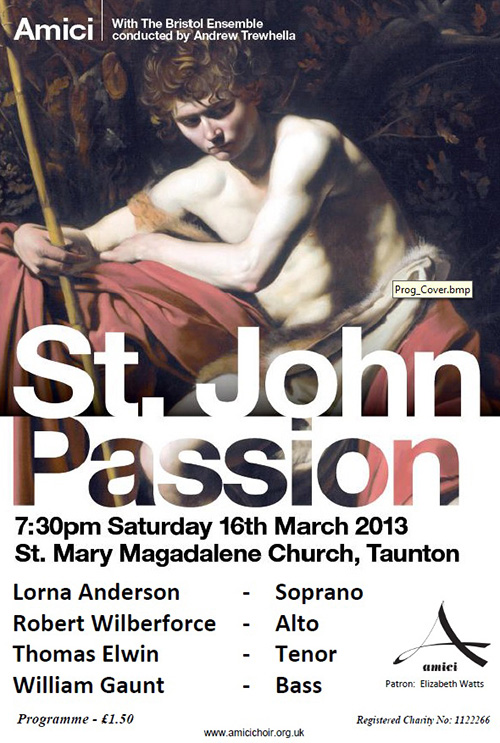
Bach’s ‘St. John’ Passion
March 2013, St. Mary Magdalene, Taunton
Soloists: Lorna Anderson, Richard Wilberforce, Thomas Elwin, William Gaunt
Amici performed Bach’s ‘St. John’ Passion recently at Taunton’s St . Mary Magdalene’s Church, their first concert since the death of their founder, Dr. John Cole. John always strived for the highest standards and this concert conducted by Andrew Trewhella did not disappoint. The Bristol Ensemble – a professional orchestra of nineteen, played for this performance. The John Passion is the shortest of Bach’s great choral compositions and in this performance it was performed in English. The blended sound was wonderfully symphonic and not at all a disappointment. This is a big sing for the choir, and in tune throughout they never flagged for a moment – their spirited syncopated choruses in the second half were well realised and bounced along as they should.
Tenor Thomas Elwin offered an outstanding Evangelist. He dealt effortlessly with the high tessitura and his diction was impeccable. Soprano Lorna Anderson sang her wonderful, arias with vocal ease and fluency. Bass, William Gaunt and alto Richard Wilberforce, both made excellent contributions in their arias. Michael Collins sang the part of Jesus from within the choir, his understated beautiful singing creating a feeling of calm which contrasted with the urgency of the Evangelist’s narrative. Other parts were sung by members of the choir and Stephen Page has to be congratulated for his Pilate – the recitatives are exposed and numerous.
The orchestra was excellent although at times the woodwinds played too loudly in the arias which was a pity. The organ continuo was superbly rendered by Matthew Bale and the ‘cello accompaniment of Robyn Austin in the alto aria “It is fulfilled” was very good indeed. Andrew conducted with confidence, pace and sensitivity and everything held wonderfully together across the entire work. Putting on these concerts is a tour de force of team effort and Amici are to be congratulated once again.
Wayne Bennett

‘Let Music Sound’
July 2013, St. John’s Church, Wellington
Shakespeare’s lines are an excellent excuse for singing! Amici’s recent Wellington concert ‘Let Music Sound’, brought together 17th to 21st century settings of the Bard’s words. Under the assured baton of Andrew Trewellha, and accompanied on various keyboards by John Young, it was a memorable evening.
Amici achieves an effortless vocal blend, despite on this occasion being slightly reduced in numbers. High points were a gloriously rich sound in Purcell’s ‘If music be the food of love’, and a very moving performance of Paul Mealor’s ‘Let fall the windows of my eyes’, a complex modern piece evoking heart-breaking melancholy.
From the dreamy mysticism of Vaughan Williams’ ‘Full fathom five’ to the lively setting of ‘It was a lover and his lass’ by P. D. Q. Bach, and Mendelssohn’s charming ‘You spotted snakes’, Amici showed themselves capable of a wide variety of styles. Whether accompanied on keyboard or organ, or unaccompanied, pitch and attack were usually spot-on; although the harmonies got a bit muddy in E. J. Moeran’s ‘Sigh no more, ladies’ and the tempi occasionally sluggish in George Shearing’s jazz-flavoured ‘Songs and Sonnets of Shakespeare’.
Spoken extracts from the plays and sonnets, handled bravely by young readers and led by James Bradnock, added to the atmosphere of this unique and enjoyable concert.
Sue Goodman, July 2013
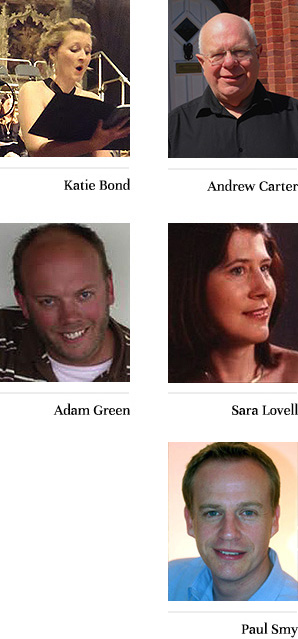
Taunton’s Christmas ‘Messiah’
December 2011
St. Mary Magdalene, Taunton
The first part of Handel’s oratorio ‘Messiah’ celebrates the Christmas story and so it has become traditional to hear the work during the festive season. Last Sunday, to a packed St. Mary Magdalene’s in Taunton, we heard a splendid performance given by John Cole’s Amici Choir and OrchestraWest. The special feature of this performance was undoubtedly the pared down orchestration which enabled a real focus on the individual part writing as well as a clarity of vocal performance so often missing in more hefty offerings.
The performance featured four excellent soloists. Soprano, Katie Bond, delivered her arias with great feeling, ease and beauty. Clara Wood, alto, sang gently with lovely phrasing and an almost boy treble quality to her voice. The men were in excellent voice too. Tenor, Paul Smy, dashed off his arias with authority and bass-baritone, Adam Green, sang his part as if he had been singing it all his life – which I suspect he had. His part is a big sing and he did it with no strain whatsoever. The singing of ‘The trumpet shall sound’ was terrific and magnificently accompanied by trumpeter Stuart Ellsmore.
The choir were, once again, on cracking good form. Their singing was crisp, tight and light where necessary. The sopranos in particular held their line tirelessly throughout the evening. The sparse orchestration enabled considerable opportunity for pointing up the dynamic writing as well as giving true expression to the words. This was most evident in the famous ‘For unto us a Child is born’ chorus which started almost like a conversation between the voices before arriving and exhorting the words ‘Wonderful, Counsellor, the Prince of Peace’. It was thrilling experience for the audience.
Messiah is a long work and it can drag but John Cole made sure that the tempi tripped along nicely. He adroitly co-ordinated the ensemble playing making sure that everything sounded together beautifully. The continuo parts of Andrew Carter on harpsichord and Sara Lovell on cello were wonderfully sustained throughout the performance and overall this was evening of great music making. At the end the audience were understandably enthusiastic in their appreciation. John Cole, Amici and OrchestraWest had demonstrated once again why the experience of live performance is so important.
Wayne Bennett